
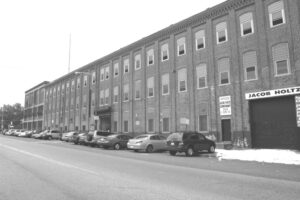
 The history of Fishtown Philadelphia is one of transformation. From a riverside fishing village to one of the city’s most influential industrial neighborhoods, Fishtown is a thriving hub for creatives, entrepreneurs, and modern businesses. Today, places like 2424 Studios carry forward that legacy by reimagining historic factory buildings into functional, design-forward workspaces.
Fishtown Industrial History
Fishtown’s earliest identity was shaped by the Delaware River. In the 18th and early 19th centuries, the neighborhood was home to fishermen, shipbuilders, and small trades that supported Philadelphia’s growing economy. Its name comes directly from this era, when fishing was one of the primary industries along the riverfront.
As Philadelphia expanded, Fishtown evolved into a manufacturing center. By the late 19th and early 20th centuries, factories, mills, and industrial buildings dominated the landscape. This period defines much of what is now known as Fishtown’s industrial history, establishing the neighborhood as a key contributor to the city’s production economy.
Industrial Legacy Still Visible Today
Many of Fishtown’s buildings were constructed for heavy use — brick warehouses, factory floors, and large-scale production facilities designed for efficiency and durability. These structures remain today, forming the architectural foundation of the neighborhood.
Rather than being demolished, many of these buildings have been preserved and adapted. This shift has made Fishtown a leading example of industrial reuse, where historic spaces are transformed into offices, studios, and mixed-use developments.
2424 Studios is part of this evolution. Once a working factory building, it now serves as a modern office campus while preserving its original industrial character.
Timeline of Fishtown Industrial History
- 1700s: Fishtown develops as a fishing and shipbuilding village along the Delaware River
- Early 1800s: Growth of small trade businesses and river-based commerce
- Late 1800s: Expansion of manufacturing, mills, and textile production
- Early 1900s: Peak industrial activity with factories and large workforce employment
- Mid–late 1900s: Industrial decline and shift toward smaller-scale businesses
- 2000s–present: Adaptive reuse of factories into creative offices, studios, and residential spaces
From Industrial Roots to Creative Growth
The transformation of Fishtown reflects a broader shift in urban development. What was once a production-heavy district is now a mix of creative offices, hospitality, tech startups, and service-based businesses. The foundation, however, remains the same: strong buildings built for work.
This makes Fishtown especially attractive for businesses that value authenticity and structure. The same features that supported manufacturing (open layouts, high ceilings, and durable construction) now support modern office and studio environments.
Why Fishtown’s Industrial Past Still Matters
The history of Fishtown Philadelphia continues to shape how the neighborhood grows today. Businesses benefit from:
- Large, adaptable building layouts
- Strong transportation and riverfront access
- Authentic architectural character
- A built-in creative and entrepreneurial community
2424 Studios reflects this ongoing story by preserving the industrial integrity of the building while providing modern amenities for today’s professionals.
Fishtown’s evolution from fishing village to industrial center to creative business district highlights a neighborhood defined by reinvention. Its industrial past is not erased — it is repurposed. Buildings like 2424 Studios ensure that the legacy of production continues in a new form, supporting entrepreneurs, creatives, and professionals.
Frequently Asked Questions
What is the history of Fishtown, Philadelphia?
Fishtown began as a fishing and shipbuilding community before growing into a major industrial hub in the 19th and 20th centuries.
What is Fishtown known for historically?
Its Fishtown industrial history includes manufacturing, textiles, and river-based commerce that supported Philadelphia’s economy.
What happened to Fishtown’s factories?
Many factories declined in the mid-to-late 20th century, but most have been repurposed into modern commercial and residential spaces.
How is Fishtown used today?
It is now a vibrant neighborhood with offices, studios, restaurants, and creative businesses, often located in restored industrial buildings.
Experience Fishtown’s Legacy at 2424 Studios
To learn more about how Fishtown’s industrial history connects to today’s creative workspace at 2424 Studios, call us today to schedule a tour and explore available office space in the heart of Fishtown.